Whisky & Ember recipe 02 · From the free guide

Whisky Sour

Fresh lemon, rounded whisky, and an optional soft foam.
Serves
1
Time
About 5 minutes
Glass
Rocks glass, fresh ice
Flavour
Bright citrus / oak / rounded sweetness
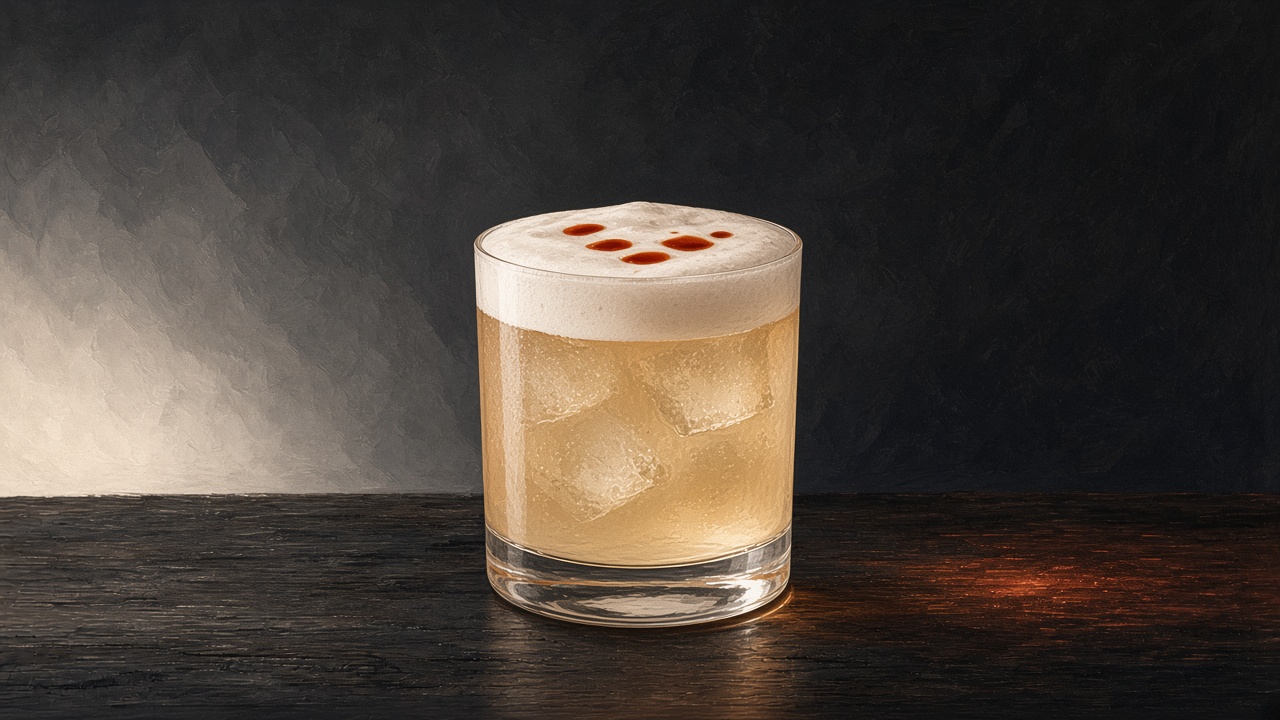
A Whisky Sour: a pale gold drink over ice cubes in a rocks glass, topped with a white foam and small drops of red bitters, on a dark bar.

The build

Tools for this drink

Ingredients

mlozIngredient
45 ml1.5 ozRye or bourbon
25 mlabout 0.85 ozFresh lemon juice
20 ml2/3 ozSimple syrup (1:1)
1 egg white (optional)
2 dashesAngostura bitters (a dash is about 1 ml)

Choosing a whisky? Compare grain, oak and ABV. Notes are in What you can change.

Method

  1. Add whisky, lemon, syrup and optional egg white. Dry shake if using egg.
  2. Add ice. Shake for 12 to 15 seconds.
  3. Double strain over fresh ice in a rocks glass.
  4. Finish with 2 dashes of Angostura.

Notes and tips

  • Make syrup with equal weights of sugar and water. Cool before use.
  • A dry shake means shaking without ice first. With no egg white, skip the dry shake and shake with ice directly.
  • Raw or lightly cooked eggs can carry Salmonella, and Health Canada notes the risk is higher for young children, older adults, pregnant people and people with weakened immune systems. Use pasteurized liquid egg white, or skip the egg white and shake with ice directly [7].
  • Double straining means pouring through the Hawthorne strainer on the tin and a fine-mesh strainer held over the glass.
  • For George’s amaretto-and-lime variation, see What you can change. Amaretto adds sweetness and almond character, so he leaves out the extra syrup in that version.

Pair with

Grilled chicken with lemon and thyme

Lemon connects glass and plate. The acidity refreshes a rich bite, while thyme gives the whisky and citrus a savoury companion.

Aged cheddar on crisp toast

Cheese supplies fat and salt; the lemon brings contrast. Toast adds crunch beside the softer texture of the optional foam.

Classic whisky, lemon and syrup measures [2], with our egg-white option, bitters and rocks service.

The story

The Whisky Sour belongs to a family with a longer history than any tidy invention story. Jerry Thomas included sour recipes in his 1862 bar guide, but not a named Whisky Sour. The drink itself appears in the Waukesha Plain Dealer, a Wisconsin newspaper, on 4 January 1870, already familiar enough to need no explanation [1]. That is evidence of an established drink, not proof of who first made it.

The lasting idea is simple: whisky supplies the foundation, lemon brings acidity, and sugar gives that acidity something to meet.

Tasting notes and why it works

Look

Pale gold over fresh ice. With egg white, a soft white foam sits on top, and the Angostura goes on last.

Smell

Fresh lemon first, with the bitters on top of the drink.

Taste

Bright citrus, then oak and a rounded sweetness. A corn-led whisky leans toward vanilla or caramel. A rye-led whisky keeps pepper and grain in view.

Why it works

Each part has a job. Whisky is the foundation, lemon brings acidity, and the syrup gives that acidity something to meet. Ice adds water as well as cold, so the shake is part of the recipe.

A sour that tastes sharp before shaking can taste more together once those parts have come together. That is why you taste the chilled, diluted drink before you change anything.

The egg white is optional. It gives the drink a soft foam, and the dry shake (no ice) comes first when you use it.

What you can change (substitutions)

The written build is rye or bourbon. For a Canadian rebuild, choose the whisky by what you want it to do here.

A rounder Sour

Look for a corn-led, oak-influenced whisky with vanilla or caramel notes [5]. Those aromas can soften the impression of lemon and sit comfortably with the foam. A very gentle bottle may disappear behind the citrus and syrup.

A more spirited Sour

A rye-led whisky can bring pepper, grain and herbal character through the lemon, so the whisky stays distinct and the finish feels less sweet [4]. Rye does not automatically mean less sweetness: Lot No. 40 also has oak-derived vanilla and toffee notes [3].

A stronger bottle

A higher-strength bottle changes the alcohol balance at 45 ml. A dry shake or a foam does not remove that difference.

One change at a time

Keep the first build fixed. Adjust sweetness only after tasting the chilled, diluted drink.

“For a fun optional variation, I enjoy adding amaretto for sweetness and almond character. My whisky-forward version uses two parts whisky, one part amaretto and one part citrus, with an egg white and no extra syrup. I dry shake, then shake with ice, and finish with Angostura bitters and a good maraschino cherry.”

“Jeffrey Morgenthaler’s Amaretto Sour inspired this direction; his published recipe puts amaretto ahead of cask-proof bourbon [6]. Mine keeps whisky at the centre. I prefer some or all lime in the citrus measure: it tastes rounder and less tart to me.”

George Logue, from Five Classics, Rebuilt
If it tastes wrong

It tastes sharp

Taste after the full shake, not before. A sour can taste sharp until it is chilled and diluted. If it is still sharp then, adjust the sweetness.

The whisky disappears

A very gentle bottle can get lost behind the citrus and syrup. A rye-led whisky keeps the whisky more distinct.

The finish feels hot

A higher-strength whisky adds more alcohol at 45 ml, and the foam will not hide it. Compare a lower-strength bottle at the same measure.

Sources

Sources as cited in Five Classics, Rebuilt. Brands are named because they worked in this drink. Whisky & Ember has no commercial relationship with any brand named here and receives no payment for naming it. Please drink responsibly.